
8.1 KiB
Sre Interview Prep Plan | week 1
- 期号: SRE Weekly Issue #393(2023-10-08)
- 作者: Code Reliant
- 链接: https://www.codereliant.io/sre-interview-prep-plan-week-1/
简介
This is the start of a 6-article series, with each going through one week along a path to prepare for SRE interviews.
We’ll spend each week focusing on building up your expertise in the key areas SREs need to know, like automation, monitoring, incident response, etc.
正文

- Week 1: Fundamentals of SRE (This post)
- Week 2: Automation & Scripting
- Week 3: Monitoring, Logging, and Alerting
- Week 4: Incident Management Lifecycle
- Week 5: Scalability, Performance, & System Design
- Week 6: Mock Interviews and Revision
The idea of interviewing for an SRE role can seem intimidating. These jobs are highly competitive in the current market and you need to demonstrate skills across a ton of technical areas.
This 6-week plan we've put together will help guide you through the process so you can really excel in those interviews. We'll spend each week focusing on building up your expertise in the key areas SREs need to know, like automation, monitoring, incident response, etc.
The structured plan enables both aspiring and seasoned engineers to gradually develop a robust SRE foundation. Novices can learn core concepts while professionals can transition roles. By the end of the 6 weeks, participants will gain deeper understanding to ace interviews. The roadmap polishes problem-solving and prepares candidates to shine technically and behaviorally in SRE interviews through a progressive plan.
Days 1-2: Introduction to SRE
First 2 days are mainly about understanding what the SRE role is about, the value that an SRE bring to a product, team, and organization. In addition, the various problems SREs help solve, and they fit in the software engineering puzzle.
Resources
SRE Questions & Problems:
- Can you describe to me the role of an SRE?
- How does an SRE differs from a systemadmin or adevops engineer?
- What is Site Reliability Engineering and how does it differ from traditional IT operations?
- SRE are known as gatekeepers . How can they balance reliability and the pace ofinnovation ?
- How would you explain the principle of " Automation over Manual Work" in SRE? Can you provide an example whereautomation significantly improvedoperational efficiency ?
- In your opinion, what are the key skills andtraits an SRE should possess? How have you demonstrated these in your previousexperiences ?
- Explain the concept of " Toil " in SRE. How can toil bemeasured andreduced in an operational environment?
- Describe a challenging technical problem you encountered in your previous role. How did you approach the problem, and whatsteps did you take toresolve it?
Days 3-4: Linux/Unix Systems
this section is tailored to gauge the understanding and practical experience of candidates with system administration, particularly in Unix/Linux environments. it covers a range of topics from basic system operations, troubleshooting, to automation and system security, which are all critical aspects of an SRE's role.
Resources
SRE Questions & Problems:
- What are the key responsibilities of a System Administrator inmaintaining areliable and efficient infrastructure?
- Describe the Linux boot process. What are the keystages and what happens at each stage?
- How would you monitor systemperformance on a Linux server? Mention anytools orcommands you would use.
- Explain the difference between hard andsoft links in Unix/Linux. Provide a scenario where one would bepreferred over the other.
- What are some common performance bottlenecks in a Unix/Linux system and how would youdiagnose and address them?
- Describe a situation where you had totroubleshoot a critical issue on a Linux server. What steps did you take toidentify andresolve the issue?
- Explain the importance of user and group permissions in Unix/Linux. How would youset or modify file permissions from thecommand line?
- What are the key differences between process ,thread , andtask in the context of Unix/Linuxoperating systems?
- Describe your experience with automation in system administration tasks. What tools orscripts have you used to automaterepetitive tasks?
- How would you set up a backup andrecovery plan for critical systems in a Unix/Linux environment? Whatconsiderations would you take into account?
Days 5-7: Networking Fundamentals
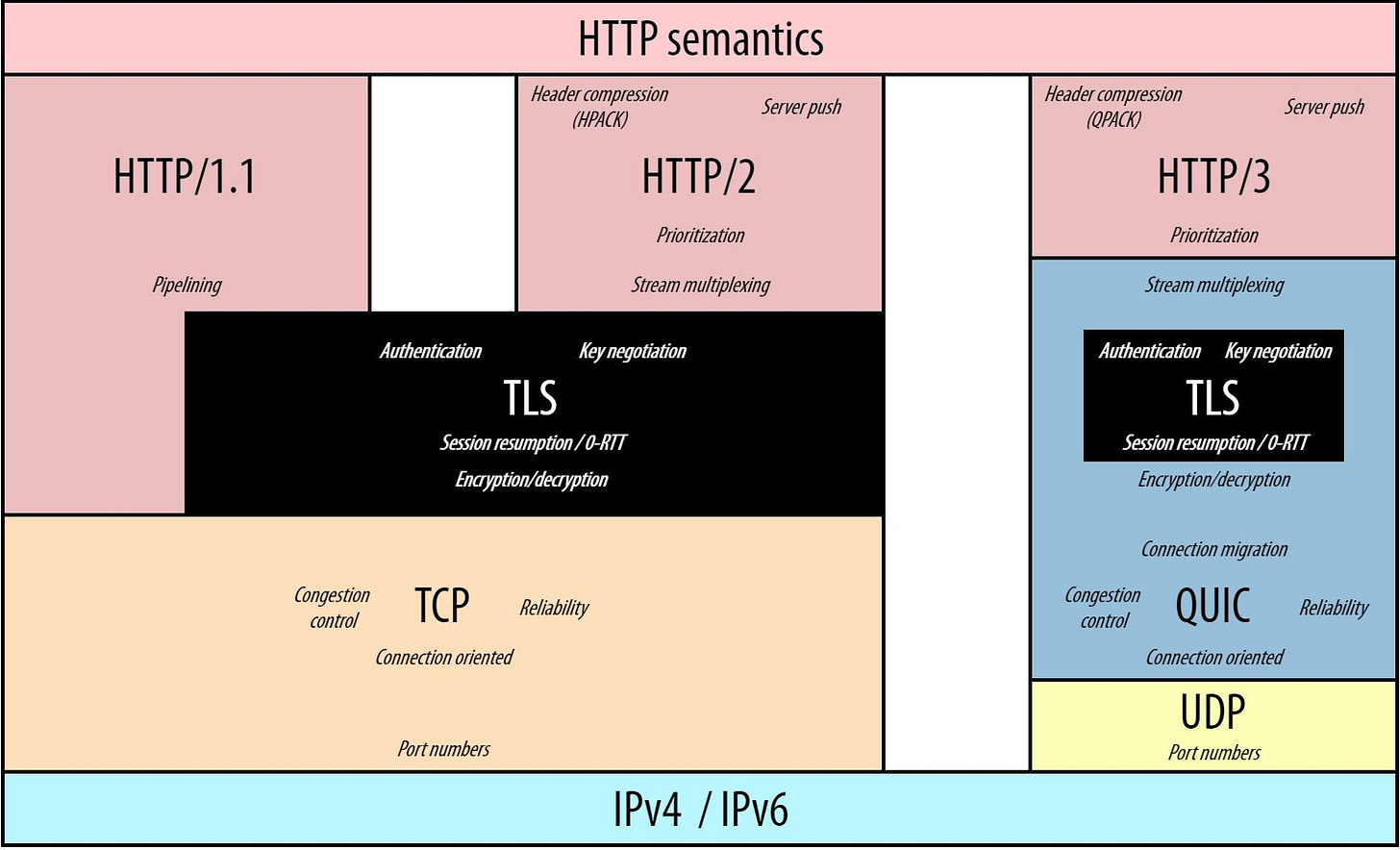
The last 3 days in the first week aim to strengthen the foundational knowledge and practical experience in networking, which is a critical aspect of Site Reliability Engineering. Networking fundamentals covers a range topics from basic networking principles, troubleshooting network issues, to implementing network security measures, all crucial for ensuring reliable and efficient system operations in an SRE role.
Resources
SRE Questions & Problems
- Explain the OSI Model and how it's relevant totroubleshooting network issues.
- Describe the difference between TCP andUDP . Can you provide a scenario where one would bepreferred over the other?
- How would you diagnose and troubleshoot a network latency issue in adistributed system? Whattools ortechniques would you use?
- Explain the concept of subnetting , and why it's important in networkdesign . Can you provide an example?
- Describe a time you had to troubleshoot a complex networking issue. Whatsteps did you take toidentify andresolve the problem?
- What is the role ofDNS in a network, and how does itwork ?
- Describe any experience you have with configuring ortroubleshooting****firewalls and/orload balancers .
- Explain the difference between HTTP/1.1 & HTTP/2?
- List and describe patterns of fault tolerance that help with various networking problems likepacket loss oroverloaded networks?
In the first week of this journey, we jump into core of Site Reliability Engineering (SRE) by exploring its basics, alongside an introduction to System Administration and Networking Fundamentals. The expectations are set high but with a structured approach; understanding the mysteries of Unix/Linux systems and grasping the essentials of networking will be an engaging endeavor.
For instance, you may encounter problems like diagnosing a misconfigured Linux service or troubleshooting network connectivity issues between servers. Each challenge faced is a stepping stone towards becoming adept SRE. As you navigate through the intricacies of system and network operations, you are not merely preparing for interviews but also building a robust foundation for your SRE career.
As you navigate through the the first week questions and resources, know that more learning awaits you in the weeks to come. From automation to incident management, every week is a step deeper into the SRE field, each with its unique flavor of challenges and learning.
Subscribe now, and ensure you don't miss out on the on the insights, practice problems, and expert guidance lined up in the upcoming weeks.