
61 lines
5.0 KiB
Markdown
61 lines
5.0 KiB
Markdown
# Jeli.io: Supporting Grounded Incident Analysis
|
||
|
||
- **期号**: SRE Weekly Issue #249(2020-12-20)
|
||
- **作者**: John Allspaw — Adaptive Capacity Labs
|
||
- **链接**: https://www.adaptivecapacitylabs.com/blog/2020/12/14/jeli-io-supporting-grounded-incident-analysis/
|
||
|
||
## 简介
|
||
|
||
While ostensibly about Jeli.io, this article makes a great case for why incident analysis is important in general and what kind of data we should be trying to gather.
|
||
|
||
## 正文
|
||
|
||
I am an angel investor in [Jeli.io](https://www.jeli.io/), and could not be more excited for the product to [come out of “stealth” mode](https://techcrunch.com/2020/12/07/jeli-io-announces-4m-seed-to-build-incident-analysis-platform/), for many reasons!
|
||
|
||
**At its core, Jeli is built around the easy collection and annotation of this data, helping analysts make connections between chat transcripts, interviews, prior related incidents, and a whole host of other data sources.** By supporting incident analysts in this way, they’ll be able to build a richer description of the event more efficiently than without it.
|
||
|
||
We’re optimistic about where the industry is heading with respect to **learning from incidents.** We believe that we are in the early stages of an important perspective shift in the industry with respect to effective incident analysis:
|
||
|
||
- what [skills](https://www.adaptivecapacitylabs.com/incident-analysis-training-and-coaching/) it requires,
|
||
- the rationale for building and continually supporting these skills, and
|
||
- the pragmatic value for companies who are doing this work well.
|
||
|
||
Learning from incidents *effectively* requires constructing the richest understanding of these complex events, from multiple perspectives, and representing an analysis in ways that can garner the broadest audience possible.
|
||
|
||
Effective analysis of an incident begins with collecting and collating *qualitative* data about the incident, which is typically found in multiple different sources. This data often includes:
|
||
|
||
- Data surrounding the *handling* of the incident. This commonly comes in the form of chat transcripts (e.g., Slack) or transcripts of audio/video bridge calls (e.g., Zoom).
|
||
- Data surrounding signals people receive (or reach for) as they try to understand what is actually happening (e.g., alerts, telemetry, metrics, exploration via queries, etc.)
|
||
- (…and many others)
|
||
|
||
This data helps analysts form what sort of *shape* the incident has, to help them choose some initial directions for their analysis. This data will also inform who they might consider interviewing for their perspectives on the event.
|
||
|
||
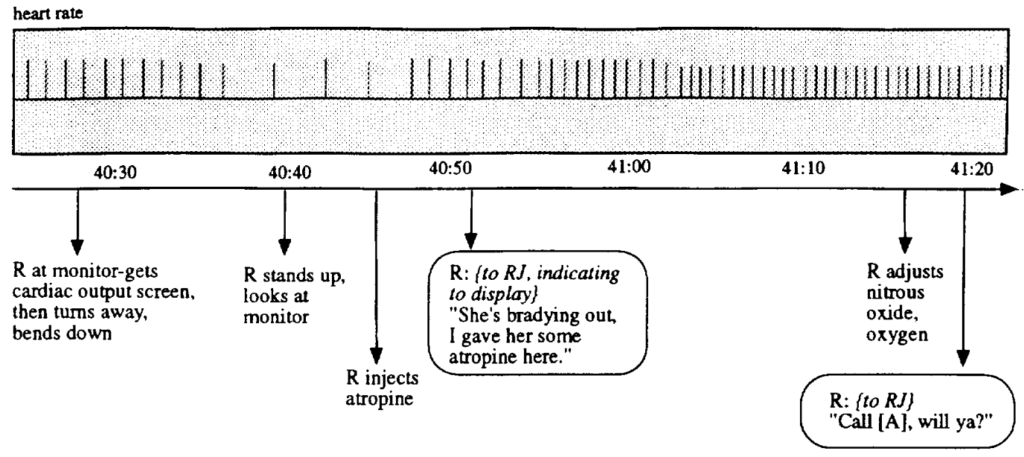
Note that these listed above represent *behavioral* data. In other words, it grounds what people actually *did* (or “said”) at the time. This *in-situ* data can then be used to help answer questions such as:
|
||
|
||
- What do people *understand* about how these systems work*normally –* not just how they break?
|
||
- What appears to have been difficult for people to do — or understand — during the response to the event?
|
||
- What specifically were people confident about in their understanding of what was happening, and what were hey *uncertain* about?
|
||
- What are people actually *doing* (by themselves, and with others) to understand how things are working when they’re uncertain?
|
||
- Was anything about the situation ambiguous? And if so, what?
|
||
- How do people know *who* to call on for help? What brings them to call those folks?
|
||
- What sort of *authority* do people have, and what authority do they believe they need from others in order to take certain actions? What are those actions?
|
||
- What surprises did people encounter?
|
||
- How do different teams *coordinate* their multiple — and often overlapping — activities with each other?
|
||
|
||
|
||
|
||
|
||
[Johannesen, L., R. Cook and D. Woods (1994): Grounding Explanations in Evolving Diagnostic Situations](https://www.researchgate.net/publication/24320112_Grounding_explanations_in_evolving_diagnostic_situations).)
|
||
|
||
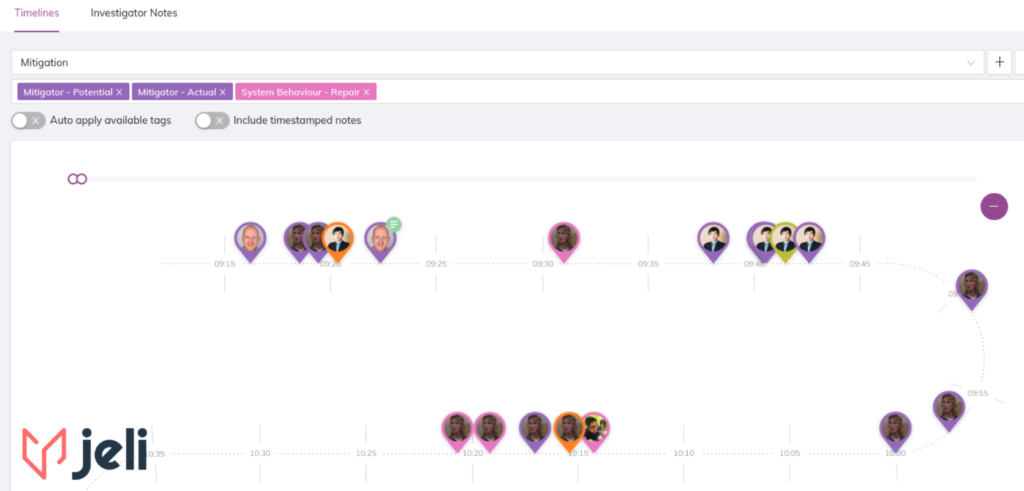
Those analyzing incidents need support in not only ***collecting*** this data, but in collating, triangulating, evaluating, and connecting it to other sources of data in order to explore what themes and narrative elements are significant for the analysis.
|
||
|
||
|
||
|
||
[in this case, at Indeed.com](https://www.usenix.org/conference/srecon20americas/presentation/elman)) to contextualize what people are doing and how they understood the situation at the time.
|
||
|
||
Qualitative data analysis tools have existed for a long time, used mostly by researchers in the social sciences. However, these tools typically aim to provide a broad and generalized toolbox for doing analysis in mostly academic and industry research contexts.
|
||
|
||
Jeli could be thought of as a focused kind of QDA tool, built *specifically for software-related incident analysis.*
|
||
|
||
This is why I invested in [Jeli.io](https://jeli.io), and what makes us excited at Adaptive Capacity Labs about their work!
|