
55 lines
2.4 KiB
Markdown
55 lines
2.4 KiB
Markdown
# Paxos
|
||
|
||
- **期号**: SRE Weekly Issue #305(2022-01-16)
|
||
- **作者**: Martin Fowler
|
||
- **链接**: https://martinfowler.com/articles/patterns-of-distributed-systems/paxos.html
|
||
|
||
## 简介
|
||
|
||
This is an approachable explanation of the Paxos algorithm with examples, diagrams, and code.
|
||
|
||
## 正文
|
||
|
||
# Paxos
|
||
|
||
Use two consensus building phases to reach safe consensus even when nodes disconnect
|
||
|
||
## Problem
|
||
|
||
When multiple nodes share state, they often need to agree between
|
||
themselves on a particular value.
|
||
With [Leader and Followers](https://martinfowler.com/leader-follower.html), the leader decides and passes its value to the
|
||
followers. But if there is no leader, then the nodes need to determine a
|
||
value themselves. (Even with a leader-follower, they may need to do this to
|
||
elect a leader.)
|
||
|
||
A leader can ensure that replicas safely acquire an update by using
|
||
[Two-Phase Commit](https://martinfowler.com/two-phase-commit.html), but without a leader we can have competing nodes
|
||
attempt to gather a [Majority Quorum](https://martinfowler.com/majority-quorum.html). This process is further
|
||
complicated because any node may fail or disconnect. A node may achieve
|
||
majority quorum on a value, but disconnect before it is able to communicate this
|
||
value to the entire cluster.
|
||
|
||
## Solution
|
||
|
||
The Paxos algorithm was developed by Leslie Lamport,
|
||
published in his 1998 paper [“The
|
||
Part-Time Parliament”](http://lamport.azurewebsites.net/pubs/lamport-paxos.pdf). Paxos works in three phases to make sure
|
||
multiple nodes agree on the same value in spite of partial network or
|
||
node failures. The first two phases act to build consensus around a
|
||
value and the last phase then communicates that consensus to the remaining
|
||
replicas.
|
||
|
||
- Prepare phase: Establish the latest [Generation Clock](https://martinfowler.com/generation-clock.html) and gather any already accepted values.
|
||
- Accept phase: Propose a value for this generation for replicas to accept.
|
||
- Commit phase: Let all the replicas know that a value has been chosen.
|
||
|
||
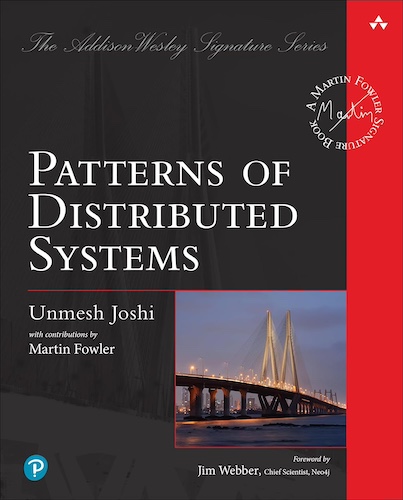
for more details go to [Chapter 11](https://learning.oreilly.com/library/view/patterns-of-distributed/9780138222246/ch11.xhtml) of the online ebook at oreilly.com
|
||
|
||
|
||
|
||
|
||
This pattern is part of [Patterns of Distributed Systems](https://martinfowler.com/)
|
||
|
||
23 November 2023
|