
170 lines
10 KiB
Markdown
170 lines
10 KiB
Markdown
# How Dropbox Saved Millions of Dollars by Building a Load Balancer
|
||
|
||
- **期号**: SRE Weekly Issue #456(2024-12-22)
|
||
- **作者**: Richard Oliver Bray
|
||
- **链接**: https://newsletter.betterstack.com/p/how-dropbox-saved-millions-of-dollars
|
||
|
||
## 简介
|
||
|
||
Why build your own? Dropbox had a heterogeneous fleet with differently-sized backends, and no load-balancer available at the time could handle that.
|
||
|
||
## 正文
|
||
|
||
**Dropbox** is a **cloud-based storage service** that is ridiculously easy to use.
|
||
|
||
Download the app and drag your files into the newly created folder. That's it; your files are in the cloud and can be accessed from anywhere.
|
||
|
||
It sounds like a simple idea, but back in 2007, when it was released, there wasn't anything like it.
|
||
|
||
Today, Dropbox has around **700 million users** and stores over **550 billion files**.
|
||
|
||
All these files need to be **organized, backed up, and accessible from anywhere**. Dropbox uses **virtual servers** for this. But they often got **overloaded** and sometimes crashed.
|
||
|
||
So, the team at Dropbox built a solution to **manage server loads**.
|
||
|
||
Here's how they did it.
|
||
|
||
*Estimated reading time: 5 minutes 15 seconds*
|
||
|
||
## Why Dropbox Servers Were Overloaded
|
||
|
||
Before Dropbox grew in scale, they **used a traditional system** to balance load.
|
||
|
||
This likely used a **round-robin algorithm with fixed weights**.
|
||
|
||
So, a user or client would upload a file. The load balancer would forward the upload request to a server. Then, that server would upload the file and store it correctly.
|
||
|
||
#### *Sidenote: Weighted Round Robin*
|
||
|
||
*A round-robin is a **simple load-balancing algorithm**. It works by cycling requests to different servers so they get an equal share of the load.*
|
||
|
||
*If there are three servers, A, B, C, and three requests come in. A gets the first, B gets the second, and C gets the third.*
|
||
|
||
**Weighted round robin** is a level up from round robin. Each server is given a **weight based on its processing power and capacity**.
|
||
|
||
**Static weights** are assigned manually by a network admin. **Dynamic weights** are adjusted in **real time** by a load balancer.
|
||
|
||
*The higher the weight, the more load the server gets.*
|
||
|
||
*So if A has a weight of 3, B has 2, C has 1, and there were 12 requests. A would get 6, B would get 4, and C would get 2.*
|
||
|
||

|
||
|
||
But there was an issue with their traditional load balancing approach.
|
||
|
||
Dropbox had **many virtual servers** with vastly **different hardware**. This made it **difficult to distribute the load evenly** between them with static weights.
|
||
|
||
This difference in hardware could have been caused by Dropbox using more powerful servers as it grew.
|
||
|
||
They may have started with an average server. As it grew, the team acquired more powerful servers. As it grew more, they acquired even more powerful ones.
|
||
|
||
At the time, there was **no off-the-shelf load-balancing solution** that could help. Especially one that used a dynamic weighted round-robin **with gRPC support**.
|
||
|
||
So, they **built their own**, which they called **Robinhood**.
|
||
|
||
#### *Sidenote: gRPC*
|
||
|
||
**Google Remote Procedure Call** (gRPC) is a way for different programs to talk to each other. It's based on RPC, which allows a client to **run a function on the server simply by calling it**.
|
||
|
||
*This is **different from REST**, which requires communication via a URL. REST also focuses on the resource being accessed instead of the action that needs to be taken.*
|
||
|
||

|
||
|
||
*But gRPC has many more differences between REST and regular RPC.*
|
||
|
||

|
||
|
||
*The biggest one is the **use of protobufs**. This file format [developed by Google](https://protobuf.dev/) is used **to store and send data**.*
|
||
|
||
*It works by encoding structured data into a binary format for fast transmission. The recipient then decodes it back to structured data. This format is also much smaller than something like JSON.*
|
||
|
||
*Protobufs are what make **gRPC fast**, but also more difficult to set up since the client and server need to support it.*
|
||
|
||
*gRPC isn't supported natively by browsers. So, it's **commonly** **used for internal server communication**.*
|
||
|
||
## The Custom Load Balancer
|
||
|
||
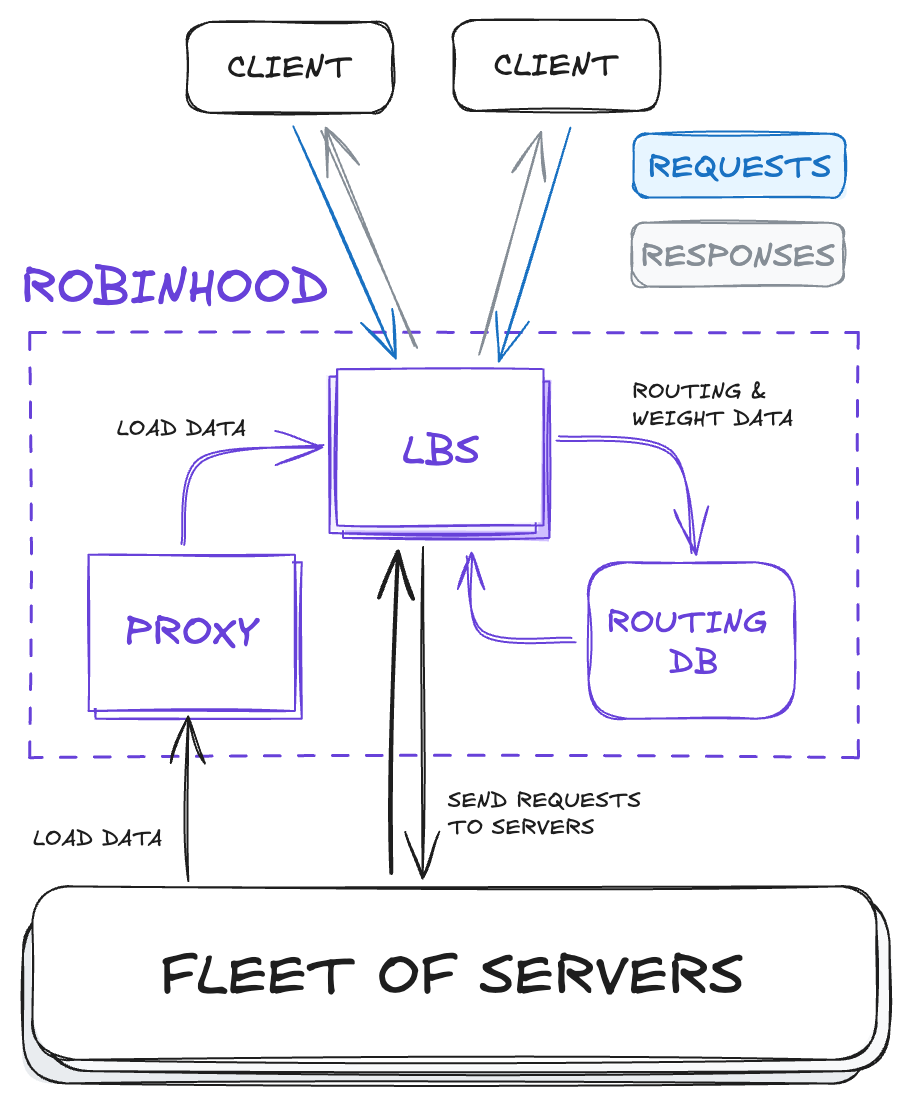
The **main component of RobinHood** is the load balancing service or **LBS**. This **manages how requests are distributed** to different servers.
|
||
|
||
It does this by **continuously collecting data** from all the servers. It uses this data to figure out the average optimal resource usage for all the servers.
|
||
|
||
Each server is given a **PID controller**, a piece of code to help with resource regulation. This has an **upper and lower server resource limit** close to the average.
|
||
|
||
Say the average CPU limit is 70%. The upper limit could be 75%, and the lower limit could be 65%. If a server hits 75%, it is given fewer requests to deal with, and if it goes below 65%, it is given more.
|
||
|
||
This is **how the LBS gives weights** to each server. Because the LBS uses dynamic weights, a server that previously weighted 5 could become 1 if its resources go above the average.
|
||
|
||
In addition to the LBS, **Robinhood had two other components**: the **proxy** and the **routing database**.
|
||
|
||
|
||
|
||
The **proxy sends server load data to the LBS** via gRPC.
|
||
|
||
Why doesn't the LBS collect this itself? Well, the LBS is already doing a lot.
|
||
|
||
Imagine there could be thousands of servers. It would need to scale up just to collect metrics from all of them.
|
||
|
||
So, the proxy has the sole responsibility of collecting server data to reduce the load on the LBS.
|
||
|
||
The **routing database stores server information**. Things like weights generated by the LBS, IP addresses, hostname, etc.
|
||
|
||
Although the LBS stores some data in memory for quick access, **an** **LBS itself can come in and out of existence**; sometimes, it crashes and needs to restart.
|
||
|
||
The **routing database keeps data for a long time**, so new or existing LBS instances can access it.
|
||
|
||
Routing databases can either be Zookeeper or etcd based. The decision to choose one or the other may be to support legacy systems.
|
||
|
||
#### *Sidenote: Zookeeper vs etcd*
|
||
|
||
*Both Zookeeper and etcd are what's called a **distributed coordination service**.*
|
||
|
||
*They are designed to be the **central place where config and state data is stored** in a distributed system.*
|
||
|
||
*They also make sure that **each node** in the system has the most **up-to-date version of this data**.*
|
||
|
||
*These services contain multiple servers and elect a single server, called a leader, that takes all the writes.*
|
||
|
||
*This server copies the data to other servers, which then distribute the data to the relevant clients. In this case, a client could be an LBS instance.*
|
||
|
||

|
||
|
||
*So, if a new LBS instance joins the cluster, it knows the exact state of all the servers and the average that needs to be achieved.*
|
||
|
||
*There are a few differences between Zookeeper and etcd.*
|
||
|
||

|
||
|
||
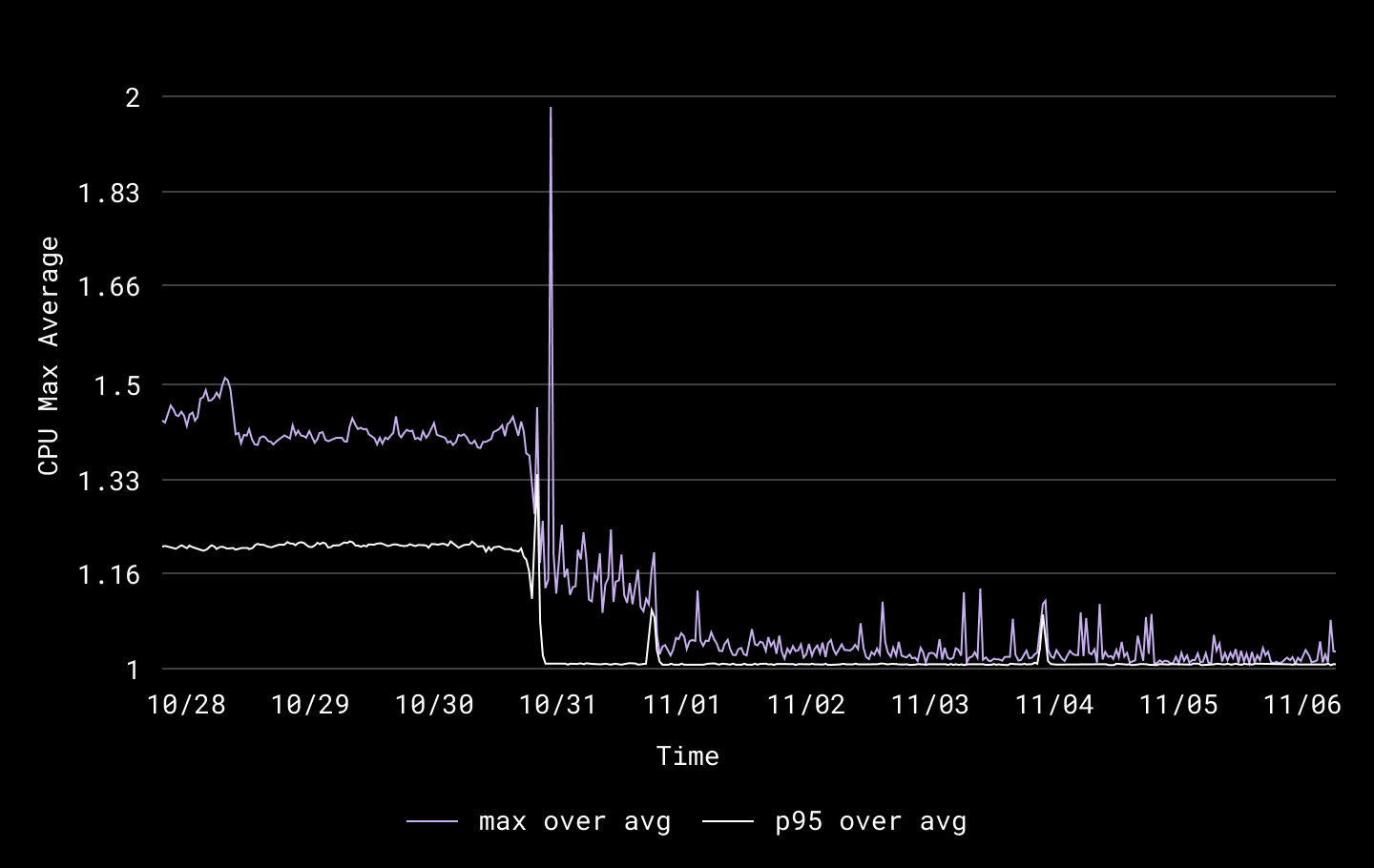
After **Dropbox deployed RobinHood to all their data centers**, here is the difference it made.
|
||
|
||
|
||
|
||
The X axis shows date in MM/DD and the Y axis shows the ratio of CPU usage compared to the average. So, a value of 1.5 means CPU usage was 1.5 times higher than the average.
|
||
|
||
You can see that at the start, 95% of CPUs were operating at around 1.17 above the average.
|
||
|
||
It takes a **few days for RobinHood to regulate everything**, but after 11/01, the usage is stabilized, and most CPUs are operating at the average.
|
||
|
||
This shows a **massive reduction in CPU workload**, which indicates a **better-balanced load**.
|
||
|
||
In fact, after using Robinhood in production for a few years, the team at Dropbox has been able to **reduce their server size by 25%**. This massively reduced their costs.
|
||
|
||
It isn't stated that Dropbox saved millions annually from this change. But, based on the cost and resource savings they mentioned from implementing Robinhood, as well as their size.
|
||
|
||
It can be inferred that they saved a lot of money, most likely millions from this change.
|
||
|
||
## Wrapping Things Up
|
||
|
||
It's amazing everything that goes on behind the scenes when someone uploads a file to Dropbox. I will never look at the app in the same way again.
|
||
|
||
I hope you enjoyed reading this as much as I enjoyed writing it. If you want more details, you can check out the [original article](https://dropbox.tech/infrastructure/robinhood-in-house-load-balancing-service#footnote-two).
|
||
|
||
And as usual, be sure to subscribe to get the next article sent straight to your inbox.
|
||
|
||
**Newsletter Spotlight**
|
||
|
||
If you want to become a more productive tech professional, check out the [Tech Productivity](https://techproductivity.co/) newsletter.
|
||
|
||
It’s full of links and tools you wish you had known about earlier.
|
||
|
||
*PS: Enjoyed this newsletter? Please forward it to a pal or follow us on socials ([LinkedIn](https://www.linkedin.com/company/betterstack/), [Twitter](https://x.com/BetterStackHQ), [YouTube](https://www.youtube.com/@betterstack), [Instagram](https://www.instagram.com/betterstackhq/)). It only takes 10 seconds. Making this one took 20 hours.*
|